

Please see the full listing section below for comprehensive specifications, benefits and uses for Limestone chippings — as well as links to inspirational garden ideas and do-it-yourself guides.


Limestone Chippings
Price range: £121.00 through £183.00 inc. VAT
Our limestone chippings 20mm provide a tough, reliable foundation for construction and landscaping projects with their pale grey to buff tones and angular, crushed shape that compacts firmly for lasting stability. These durable chippings offer excellent load-bearing strength and superb free-draining properties. Perfect for:
- sub-base layers under driveways, patios and paths
- concrete mixes as a strong coarse aggregate
- pipe bedding
- budget-friendly driveways and paths
- trench backfill and permeable paving bases
The interlocking angular pieces ensure superior compaction and drainage, while helping suppress weeds when laid over a membrane. A versatile, hard-wearing option that’s low-maintenance and built to handle UK weather.
Gravel Calculator
| Size | 6mm, 10mm, 20mm |
|---|---|
| Quantity | 20 x 20kg Mini Bags, 40 x 20kg Mini Bags, 850kg Bulk Bag |
You may also like…
-
Weed Control Fabric Sheets
Price range: £5.90 through £54.95 inc. VAT Select options This product has multiple variants. The options may be chosen on the product page -
Weed Control Mat Membrane Pegs + Buffer Washer Pins
Price range: £6.95 through £15.95 inc. VAT Select options This product has multiple variants. The options may be chosen on the product page -
Heavy Duty Weed Membrane Sheet
Price range: £5.90 through £54.95 inc. VAT Select options This product has multiple variants. The options may be chosen on the product page


Related products
-
Silver Granite Gravel
Price range: £137.00 through £197.00 inc. VAT Select options This product has multiple variants. The options may be chosen on the product page -
Everest Blue Gravel
Price range: £167.00 through £266.00 inc. VAT Select options This product has multiple variants. The options may be chosen on the product page -
Ballast
Price range: £124.00 through £166.00 inc. VAT Select options This product has multiple variants. The options may be chosen on the product page -
Flamingo Gravel
Price range: £187.00 through £317.00 inc. VAT Select options This product has multiple variants. The options may be chosen on the product page


Specifications, Inspirational Ideas & DIY Guides

Jump Links
Specifications, Why Professionals & Homeowners Choose, Applications, Inspirational Ideas, DIY Guides, Maintenance, Purchasing Tips, FAQs, Related Products
Overview
After years of working with 20mm limestone chippings on driveway projects, they've become one of my default choices whenever a project calls for a budget, decorative surface that drains well and finishes cleanly. The angular shape helps the stone interlock and stay put underfoot, and the open grading lets water percolate straight through rather than pooling on the surface. Laid over a properly constructed sub-base, 20mm limestone gives a driveway a solid, tidy finish at a price that won't break the bank. Read on for the technical specs and results from multiple construction applications, along with everything else you need before ordering.
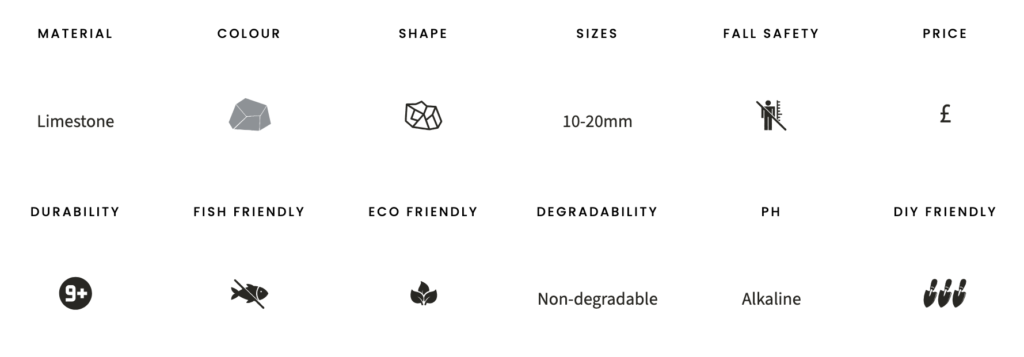
Specifications
Why Professionals & Homeowners Choose Limestone Chippings
Limestone chippings compact into a dense, stable layer that handles heavy traffic and harsh British conditions. From dozens of UK jobs, here are the standout results:
- Outstanding Load-Bearing: The 20mm size compacts tightly to distribute weight evenly; on a driveway in Croydon it took a 7t excavator for weeks with minimal settlement.
- Exceptional Drainage: Water disappears fast even after torrential rain.
- Superior Interlocking: Angular edges grip, preventing lateral movement on slopes or under turning vehicles.
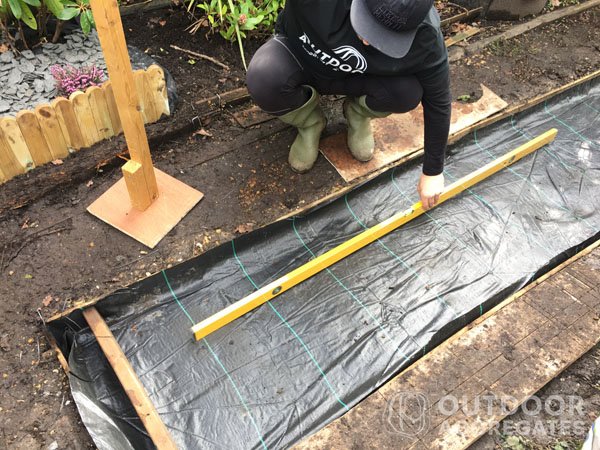
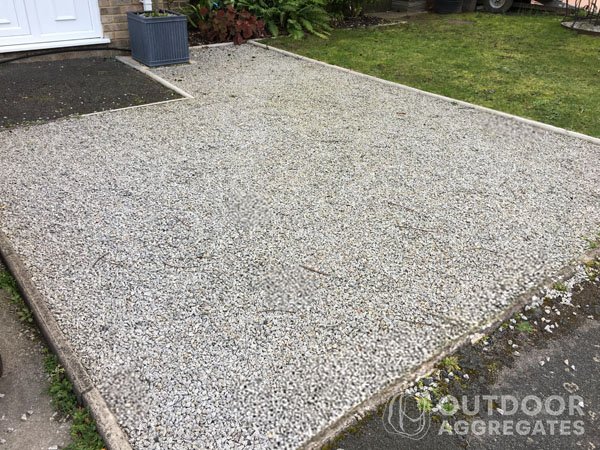
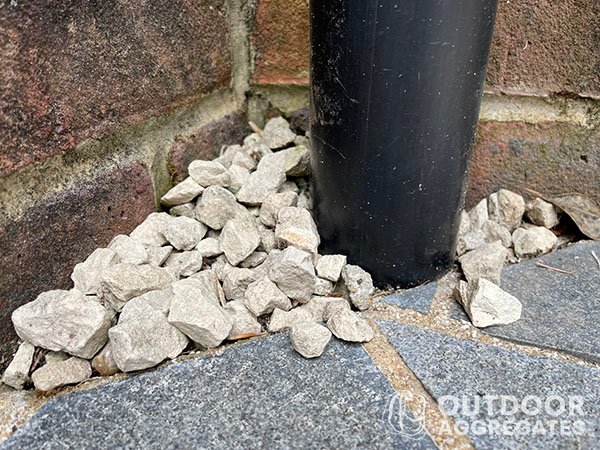
Here are some examples from previous installations:
Applications
The high-calcium composition of limestone chippings deliver the mechanical performance demanded by construction landscaping while their subtle grey to white colour creates a professional finish to surfaces. They can work beautifully with alkaline-tolerant plants such as Sedum 'Autumn Joy', Achillea millefolium, Festuca glauca and Eryngium planum for low-maintenance borders and traffic zones.
Some colleagues say that limestone is not suitable for French drains. This is due to the fact that they degrade over time which will eventually lead to clogging and failure, because as they deteriorate they tend to pack down like a sub base. I don't fully agree, but if it's a very long term, deep installation, eventually they will degrade, so consider the importance and depth of the drain. Also, I avoid limestone chippings around acid-loving shrubs (they raise soil pH), in children’s play zones, or directly in fish ponds, as alkaline leaching can affect water chemistry.
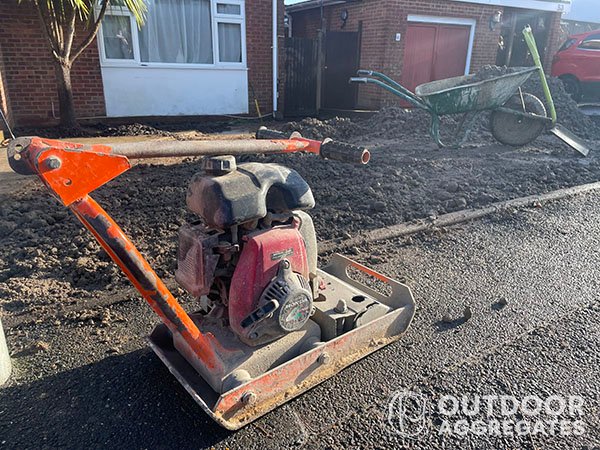
- Driveway Surfaces - As a surface on residential drives - superb compaction and drainage in one material.
- Pipe Bedding Trenches - The size creates large voids for rapid water infiltration, minimising moisture freezing around pipes.
- Path Foundations & Hard Landscaping - A hard-wearing, well-draining surface for high-traffic garden paths, and a clean bedding layer for edging and stepping stones.
- Concrete Aggregate - They add bulk and strength to concrete for garden walls, steps and retaining features.
- Erosion Control & Rockeries - Locks firmly on slopes to stabilise soil while giving a neat finish.
Inspirational Ideas

Everything you need to know before you dig, from trench sizes to the two mistakes that kill most drains.

Ben Parrot

This is the foundation of every path, driveway and patio I've ever laid.
Ben Parrot

The sums I ran for clients on every gravel drive I laid, worked again at this year's prices.
Ben Parrot
DIY Guides

The full build, crate and rubble versions & solutions most guides never mention.
Ben Parrot

Our calculator estimates your needs, in bulk bags and accounts for compaction in the answer.
Ben Parrot

Get the depths, base and drainage right, and a gravel drive will outlast the car parked on it.
Ben Parrot
Maintenance
How you handle weeds depends on the setup: on a decorative bed, lay it straight onto the soil before after removing all weeds and roots and then rake lightly every few months to redistribute. On a paving area or driveway, a heavy duty membrane goes over the compacted sub-base instead. For deep cleaning, particularly where algae discolours the chippings, check our guide on how to clean chippings for step-by-step tips.
Purchasing Tips
Quarry batches can vary slightly in the different shades, so it’s best to be prepared for some natural variation. Try to get what you need in the one load. Measure your area in square metres and the use our gravel calculator to get an accurate order.
If you would rather talk your limestone chippings order through with a person, ring Outdoor Aggregates on 0330 043 7585. The office is open 7am to 7pm, seven days a week.
FAQs
Are 20mm limestone chippings suitable for sub-base layers?
20mm limestone chippings are not recommended as a structural sub-base material. Sub-bases need a graded blend of fines and lumps, such as Type 1 (MOT1), to compact into a dense, load-bearing layer. A single-sized 20mm chipping lacks that fines content, so it stays loose rather than binding, and is better used as a decorative surface layer over a proper sub-base.
Can crushed limestone be used in concrete mixes?
Yes, 20mm crushed limestone works well as a coarse aggregate in concrete for garden structures, adding both strength and a lighter colour to the finished mix.
How do 20mm limestone chippings perform in soakaways and drainage systems?
20mm limestone chippings perform well in soakaways and trench drains, where the large voids between the stones allow rapid water infiltration and filtration. Wrapping the stone in geotextile prevents surrounding soil migrating in and clogging the voids. Over time, typically more than a decade, fines can still work their way in and reduce performance, so periodic inspection is worth building into the design.
What depth should I use for 20mm limestone chippings in driveways?
For a driveway sub-base, use 100-150mm of compacted Type 1 (MOT1), not 20mm limestone chippings, since a graded sub-base material is what carries the load. Where 20mm limestone is used as the decorative surface layer on top, lay it at around 40mm deep, roughly twice the stone's grade size, so it beds in without shifting.
Are limestone chippings alkaline and will they affect nearby plants?
Limestone chippings are naturally alkaline and can slowly raise soil pH nearby. This suits lime-loving plants but they should be kept away from acid-loving species such as camellias, rhododendrons and blueberries, which need a low pH to thrive.
How long do 20mm limestone chippings last in various applications?
When properly laid and compacted, 20mm limestone chippings will last decades with virtually no maintenance beyond occasional topping up in high-wear traffic surface areas.
-

Ballast
Price range: £124.00 through £166.00 inc. VAT -
Limestone Chippings
Price range: £121.00 through £183.00 inc. VAT -
Red Self-Binding Gravel
£164.00 inc. VAT -

Golden Self Binding Gravel
£167.00 inc. VAT


Reviews
There are no reviews yet.