


Key Takeaways
- Fox proofing a chicken coop means closing every way a fox gets in: digging under the run, climbing or jumping the fence, biting through chicken wire, squeezing through gaps of 10cm, opening a weak latch or via a door left open at dusk.
- Chicken wire keeps hens in but a fox can bite through the thin wire. Galvanised welded mesh of 16 gauge (1.6mm) or thicker, with holes of 25mm or smaller, is where a fox proof chicken run starts. 14 gauge (2mm) is better.
- A fox proof apron is welded mesh laid flat outwards from the foot of the run, at least 30cm wide and up to 60cm where a fox already digs, pegged down and covered with soil or slabs. A fox digging at the fence finds mesh under its feet and gives up.
- A fox proof chicken run needs a mesh roof, or a fence at least 1.8m high with an outward overhang because foxes climb and jump. An electric fence only works as an add-on, running day and night.
- Chicken coop doors stay fox proof with two-step locks such as a bolt with a locking carabiner, and a routine of shutting the hens in at dusk every night.
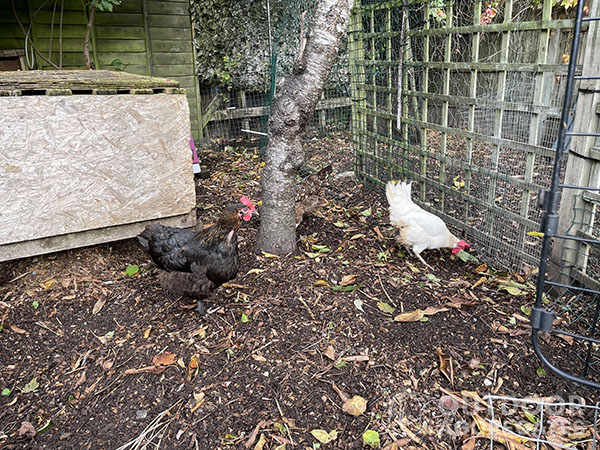
As a boy, I once learned the hard way that an adult fox can squeeze through a gap of only 10cm, which was way smaller than my family expected. Since then I learned that a fox needs only one weak point: that gap under the door, one in stapled wire, or a loose latch it can nose open, to name a few. Fox proofing a chicken coop is about finding every weak point before the fox does. My guide goes through each way a fox can get in, then solid fixes for each.
How Do Foxes Get Into Chicken Coops?
Foxes get into chicken coops by digging under the run, jumping or climbing the fence, biting through thin wire, squeezing through gaps or opening weak doors. A fox will test a run all the way round, often over many nights, and it only needs to succeed once.
I remember I was called out to look at a chicken run after a lady had lost three hens to a fox overnight. She had checked the fencing for signs of digging and couldn’t find any obvious way in. The run was enclosed by a fence, which seemed intact, but something had clearly got in. When I measured around the perimeter, there were sections that were only 160cm high, so immediately I assumed that the fox had jumped or climbed. Foxes are surprisingly agile and can clear obstacles that most people assume are high enough to keep them out. I explained that the fence was less of a barrier than she had thought and also discussed the other ways to make her enclosure even more secure.

Image by salofoto from Pixabay
The coop itself has many potential weak points as well. A lift out nest box floor can be pushed up from underneath, and a droppings tray on runners can be pulled out. All ventilation holes need mesh over them, and light, cheap coops can be easily knocked over.
| Way in | What the fox does | The fix |
|---|---|---|
| Under a fence | Digs at the foot of the fence and slips under | A welded mesh apron laid flat outwards, or a ring of slabs |
| Through the wire | Bites through chicken wire or pulls out staples | Welded mesh of 16 gauge or thicker, held with screws and washers |
| Over the top | Climbs the mesh or jumps the fence | A mesh roof, or a fence at least 1.8m with an outward overhang |
| Through a gap | Squeezes through a gap of about 10cm | Close every gap; mesh over vents and the gap under the roof |
| Through the coop | Pushes up a loose nest box floor or pulls out a tray | Screw down loose floors; secure trays |
| Through the door | Opens a hook or turn button, or finds the pop hole open | Two-step locks; shut the hens in at dusk |
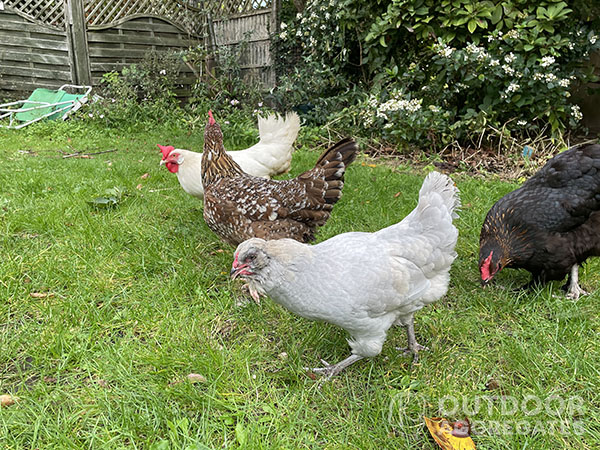
How Do You Fox Proof a Chicken Coop?
Fox proofing a chicken coop and run means welded mesh walls, a flat mesh apron at the base, a mesh roof or tall fence, and no gaps. Each one closes a different way in, and a fox only needs one, so a run needs all of them. In the order I’d do them:
- Walls: galvanised welded mesh of 16 gauge (1.6mm) or thicker, with holes of 25mm or smaller, fixed with screws and large washers or a batten, never staples.
- Base: an apron of the same mesh laid flat outwards, at least 30cm wide and up to 60cm where a fox already digs, pegged down and covered with soil or slabs.
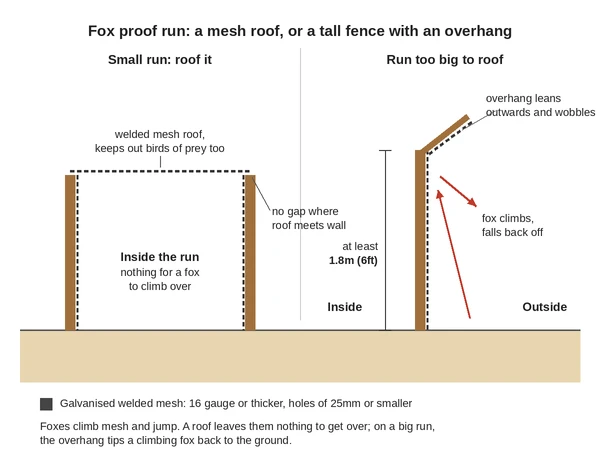
- Roof: a welded mesh roof, which keeps out birds of prey as well. Where a run is too big to roof, a tall fence with an overhang (below).
- Gaps: nothing a fox could squeeze through, which means no gap of about 10cm anywhere. Check where the roof meets the walls, because a gap there is easy to miss from the ground.
- Doors: a bolt plus a locking carabiner or padlock on the run door, the same as on the coop.
- Checks: once a year, lift a corner of soil or a slab and make sure the buried apron has not rusted through.
Is Chicken Wire Fox Proof?
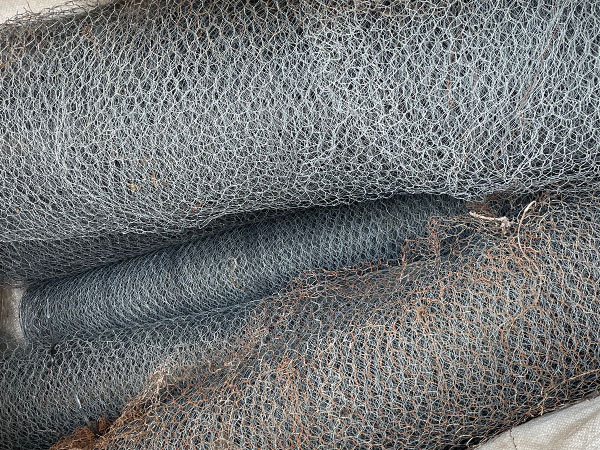
Chicken wire is not fox proof. The thin, twisted wire type only keeps hens in – foxes can bite through it or pull it open.
Galvanised welded mesh is what will keep foxes out, when its fixed properly. That’s a wire welded at every crossing into a stiff grid, 16 gauge (1.6mm) or thicker, best with holes of 25mm or smaller. When it comes to wire the lower gauge, the thicker wire, so a 14 gauge (2mm) is stronger again. While they are unlikely to grab a chook through a hole of 50mm, a fox can still fit it’s mouth through, so 25mm or under is optimal. The wrong wire is one place where saving money ends up costing you later, as I cover in my guide to a low cost DIY chicken coop.
As I mentioned above, any mesh is only as strong as its fixings. A fox will relentlessly tug at the edges, so staples will eventually come out. The best way is to fix it with screws and large washers, or with a timber batten over the edge so the mesh is clamped along its whole length.
| Wire | Keeps a fox out? | What it is for |
|---|---|---|
| Chicken wire | No | Keeping hens in |
| Welded mesh, 19 gauge | Not reliable enough | Keeping birds in |
| Welded mesh, 16 gauge (1.6mm) | Yes | Run walls, roof and apron |
| Welded mesh, 14 gauge (2mm) | Yes | Situations where a fox keeps trying |
Do Foxes Dig Under Fences?
Foxes do dig under fences, and there are two fixes: a welded mesh apron laid flat outwards from the run’s foot or concrete slabs.
A fox tries digging at the base of a fence, so with an apron laid outwards, it is standing on mesh as it digs and can’t get under. The apron should be at least 30cm wide, and go up to 60cm where a persistent fox has already had a go. Peg it down well and cover it with soil or slabs, so it lies flat.
Slabs laid in a ring around the outside of the run do as good a job, and give you a mud-free path as well. If your run has a fall for drainage, lay the slabs so they don’t block the water’s way out or you end up with a muddy chicken run.
Lastly, buried mesh rusts faster in wet ground, so lift a corner of the soil or a slab every year and check the condition of the apron.
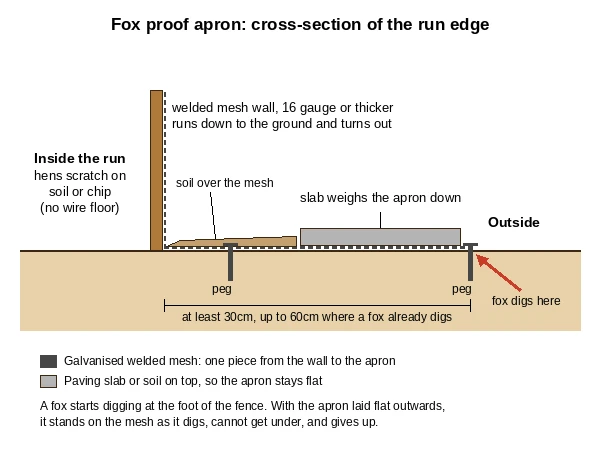
You should not put wire across the floor of your chicken run. Hens need to scratch, and walking on wire can injure their feet. Keep a scratching floor inside instead, and if you are just setting up your coop, check my chicken run flooring guide. It compares the different types of floor surface materials.
How High Should a Fox Proof Fence Be?
A fox proof fence for a chicken run should be at least 1.8m (6ft) high, with an overhang leaning outwards at the top. Height alone will not stop a fox, because foxes climb mesh. The overhang is what does the work: it wobbles as the fox climbs, and the fox falls back off. If your run is small enough to roof, I would roof it every time, because a roof leaves a fox nothing to climb over.
Does an Electric Fence Keep Foxes Out?
An electric fence keeps foxes out only as an extra layer around a run already proofed with mesh, never as the only defence. They work by giving a fox a short, sharp shock, and most learn quickly. It only works if it stays switched on day and night and you check it regularly with a fence tester. The grass under also needs to be kept short as long grass touching the wire drains the power.
How Do You Fox Proof a Chicken Coop Door?
A fox proof chicken coop door has a secure pop hole shutter (a small door) and two-step locks a fox can’t use their nose open.
A good pop hole is usually around 30 x 30cm, fit with a shutter that slides or drops into a frame and then bolts shut. On every door use a bolt plus a locking carabiner (a clip that screws shut) or a padlock. A hook and eye or a turn button can be opened by a fox’s nose.
Automatic doors save a trip at dawn but they can shut birds out that are out late. They can also jam. If you use one you’ll need to spot check the hens each evening.

Image by Jon Pauling from Pixabay
How Do You Keep Foxes Away From Chickens?
The safest way to keep foxes away from chickens is by keeping them in a fox proof run. If you want them to range you will need to watch them during late spring and winter when foxes are hungriest. Here are some tips:
- Lock up at dusk, every night, when a fox is most likely to attack.
- Change up your let-out and shut-down times occasionally so the fox can’t work out your routine. Lights and radios only work until it gets used to them.
- Keep hens inside the run in late spring and winter, when foxes are hungriest and hunt in daylight too – especially for three days or more after an attack.
Badgers are a lot stronger than foxes, which is another reason to build the coop out of welded mesh and sound timber.
Next Steps
Fox proofing a chicken coop comes down to welded mesh in place of chicken wire, an apron at the foot of the run, a roof or a tall fence with an overhang, two-step locks, and shutting the hens in at dusk. Close every way in, and a fox has nothing left to try.

Chicken Run Flooring That Stays Dry Through UK Winters
The run floors I recommend, and the ones I’d steer you away from, for wet British gardens.
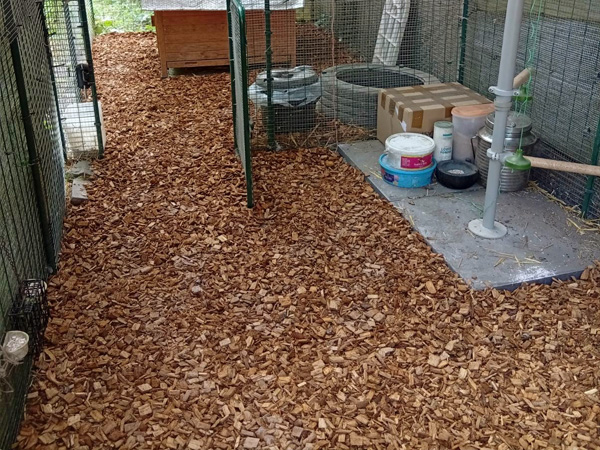
With the edges of the run secure, the floor inside comes next. At Outdoor Aggregates, our Chicken Run Hardwood Chips are sold in a 700L builders bag for £144 excluding delivery. To size your order, find out how much chip your run will take, with a price estimate. If you would like to talk with us, call Outdoor Aggregates on 0330 043 7585. The office is open 7am to 7pm, seven days a week.
Have you ever lost hens to a fox, or seen one testing your run? How did it get in, and what did you change afterwards? Tell me in the comments what made the difference.
-

Chicken Run Hardwood Chips
Price range: £139.00 through £339.00 inc. VAT

FAQs
What happens if a fox gets into a chicken coop?
A fox inside a chicken coop can kill many birds in one visit, carrying thenm away and burying them to come back for. Hens that survive can be badly hurt or disturbed, so check them all the next morning.
Will a fox come back after killing chickens?
A fox will certainly come back after killing chickens, because it remembers a coop or run where it once found an easy meal.
DIY Guides

How to avoid the common pitfalls and get great results first time

Ben Parrot

I used to keep hens, and the wrong type of sand in a dust bath is a common mistake to
Ben Parrot

The run floors I recommend, and the ones I'd steer you away from, for wet British gardens.