


Key Takeaways
- Read the bag twice: most coloured bark sold in the UK is dyed recycled wood chip rather than true bark, and the listing rarely says so plainly.
- The dye is not the danger: coloured mulch is dyed with carbon black or iron oxide, and neither has any evidence of harming plants.
- The wood is the question: recycled chip can include old pallets, decking and demo timber, some of it treated with nasty chemicals banned from sale back in 2006. Ask the supplier what the wood was.
- Dyed colour is a one-season look: the dye fades on the surface and cannot be raked back. Natural bark can, and a light raking lifts fresh colour for years.
- Pine bark is naturally red-brown: the colour most people are after is sitting in an undyed, natural product already.
- Depth still rules: any bark, coloured or natural, goes on at 5-7.5cm, straight onto soil.
Every now and then a client would show me a photo of a bright red border and ask what the stone is, but it’s not stone. Nine times out of ten it is dyed chip that is laid vivid red in April and turns pink-grey by August – maybe also with a terracotta stain on the paving where the wet bag sat.

We sell natural bark but no dyed product currently, so weigh what follows accordingly. Coloured mulch is not poison. But what is in the bag matters, and the bag itself mightn’t tell you.
What Is Coloured Bark Actually Made Of?

Most coloured bark sold in the UK is dyed wood chip, often recycled timber, rather than true bark from a conifer’s outer layer. Bark and wood chip are different products. Bark is stripped from the trunk at the mill and ground into grades; wood chip is the wood itself, straight through a chipper. The big-shed bags blur this happily, calling the same product “woodchip mulch” in the title and “bark chippings” in the description.
The difference matters with colour. Wood loses its looks far faster than bark, which is half the reason it gets dyed, and dye takes better to dry recycled timber than to fresh bark. So the vibrant bag is usually the cheaper material wearing make-up.
Is Coloured Bark Safe for Plants?

Coloured bark is safe for plants as far as the dyes go; the real question is what wood was ground up underneath the colour. The dyes are mundane: carbon black for the dark grades, iron oxide (the same as rust) for the reds and browns. Neither has any evidence of toxicity to plants, pets or people.
The wood less so. Recycled timber streams include pallets, old decking, fence posts and demolition waste, and some of that wood was pressure-treated with chemicals you do not want ground up in a border. CCA (chromated copper arsenate, an arsenic-based treatment) was banned from sale here in September 2006, creosote likewise, but neither ban touched wood already in service. A deck built in 2004 is only now reaching the end of its life, and where it goes next is the point. There is no British labelling scheme certifying the wood source of a coloured mulch, so you have two tools: the product description, and the supplier’s answer when you ask what the wood was. Virgin timber, fine. “Recycled wood”, ask where from. No answer, leave it.
Two placement rules regardless. Keep dyed product out of edible beds. And keep any wood-based mulch on the surface: dug in, it borrows nitrogen from the soil as it rots, and your plants will suffer.
Dyed vs Natural Bark Compared
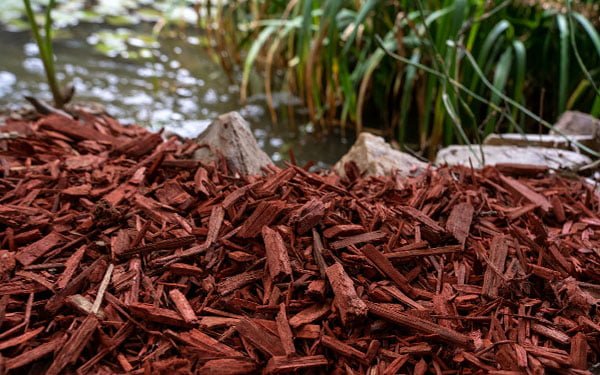

The short version: dyed chip can look great on day one, natural bark wins every day after.
| Dyed coloured chip | Natural bark | |
|---|---|---|
| What it usually is | Recycled wood chip, dyed | Conifer bark, ground to grade |
| Where the colour comes from | Carbon black or iron oxide dye on the surface | The bark itself, all the way through |
| How it fades | Dye bleaches in one season; black goes grey first | Colour softens slowly over 2–3 years |
| Can you rake it back? | Raking cannot restore a faded dye | A light rake lifts fresh colour to the surface |
| Wet weather | Fresh dye can stain hands, paving and anything pale | Bark on soil darkens and stays put |
| The buying question | What was the wood before it was chipped? | Is it true bark, or a bark and wood mix heavy in shavings? |
That last row cuts both ways though. Cheap “natural” bark has its own trick: bulking out with wood shavings, which rot fast and look tired faster. Anything sold as a bark and wood mix is usually heavy in them. The decorative bark comparison puts our grades side by side.
Red Bark Chippings Without the Dye

Red bark chippings are the colour everyone actually wants, and pine bark gives you that red-brown naturally, no dye involved. Pine is one of the best barks going: slow to break down, handsome, and safe around rhododendrons, azaleas and camellias, because it will not push the ground alkaline the way limestone chippings or spent mushroom compost can. It does not acidify the soil underneath either, whatever the bag tells you. The pine bark mulch range compares the grades.
At the other end of the scale, light coloured bark chippings are usually just fresh softwood grades before they weather, so pick a coarse one or it will migrate.
Black Bark Chippings

Black bark chippings are nearly always dyed, because no bark comes out of a mill jet black. Black dye is also the fastest fader of the lot; it bleaches to grey within months in an open, sunny bed, and ends up looking worse than the brown it started life as. And black absorbs heat, which can stress shallow-rooted plants in a south-facing border.
For a dark bed I would sooner use composted bark fines, which run a rich deep brown that reads nearly black when damp, and feed the soil while they sit there. If the scheme genuinely needs true black, buy the dyed product with your eyes open and budget to top it up each year, because that is the maintenance cycle you are signing.
How to Buy and Lay Coloured Bark

Buying bark online is buying sight unseen, so the checks happen on the listing:
- Find the material. Does the description say bark, wood chip, or avoid the question? A listing that flips between the two is telling you something.
- Ask the wood question. For any dyed or recycled product: what was the wood? One email. A good supplier answers same day.
- Price the fade. Dyed colour is an annual subscription. Natural bark at a higher price per bag is usually cheaper by year three.
- Get the quantity right. The bark and wood chip calculator does the sums for you.
Laying it, one thing above all: bark goes straight onto soil, not onto membrane. I know the instructions on the bag usually say to lay weed fabric first. I disagree. On fabric, bark dries out, gets light, and blows about the garden, and the birds finish the job. On soil it draws moisture from beneath and stays put. Lay it 5–7.5cm deep for weed control, 7.5–10cm where holding moisture is the goal, and keep it off the stems. The full method is in how to lay bark chippings.
Next Steps
If it is the red-brown look you are after, we carry natural pine, conifer and spruce barks that give you the colour without the dye or the annual re-buy. Start with the bark chippings buying guide if you are still weighing grades, or get in contact. For the full comparison across every mulch type, not just bark, see what is mulch.

If you are looking for a natural bark in place of a dyed one and would rather talk it through with a person, ring Outdoor Aggregates on 0330 043 7585. The office is open 7am to 7pm, seven days a week.
Have you ever used coloured bark? How long did the colour hold before it started to fade? Tell us in the comments.
FAQs
What is red mulch dyed with?
Red mulch is dyed with iron oxide, the same compound as rust, and black mulch with carbon black. Neither dye harms plants; the wood carrying the dye is the thing to check.
Is red bark mulch good?
Red bark mulch does the same mulching job as any wood-based mulch, holding moisture and shading weeds out. The dyed versions just do it in fancy dress for a season; natural pine bark does it in the same colour for years.
Is coloured play bark safe?
Coloured play bark is a separate, graded product and needs to meet the playground surfacing standard (BS EN 1177), which garden mulch does not. Buy from the certified play bark range rather than colouring a play area with garden-grade chip.
Will bark chippings stop weeds?
Bark chippings at 5–7.5cm deep will hold annual weeds down laid straight onto soil, no fabric needed. Perennials like bindweed will come through anything, so dig those out first.
How much will 100 litres of bark cover?
A 100 litre bag of bark covers roughly 1.3m² at 7.5cm deep. Allow about 1m² per bag for a proper 10cm moisture layer, and top up yearly with about 2.5cm, not a fresh full layer.