

Eco-Friendly Outdoor Gems That Sparkle

By Ben Parrot – Landscape Gardener & Amateur Geologist
Classification:
Glass landscaping material and construction aggregate
Geological name(s):
Manufactured glass
Other Name(s):
Glass gravel, glass pebbles, garden glass pebbles, glass stone, decorative glass, landscaping glass
Overview
Welcome to the only encyclopaedia for decorative aggregates and landscaping materials. Glass aggregate, also known as glass gravel, is an unique decorative aggregate known for its sparkly appearance and long-lasting, versatility in outdoor and indoor design landscapes. Speciality glass aggregates are produced by melting down and reforming recycled glass, which provides a distinct look as compared to simple crushed glass. Glass decorative aggregates can have complete and irregular shapes, similar to crushed gravel. Made from recycled materials, they are an eco-friendly choice for gardens, helping reduce waste and promote sustainability.
This comprehensive encyclopaedia listing about glass gravel for landscaping, a hardscape and construction aggregate, includes information such as its specifications, benefits, applications and incompatibilities as a landscaping material. It is also a portal to many DIY-friendly resources, including; a list of ‘similar to’ alternatives, articles for inspiration that cover fundamental design principles, as well as a variety of step-by-step project instructables for building your own decorative aggregate features.
Specifications
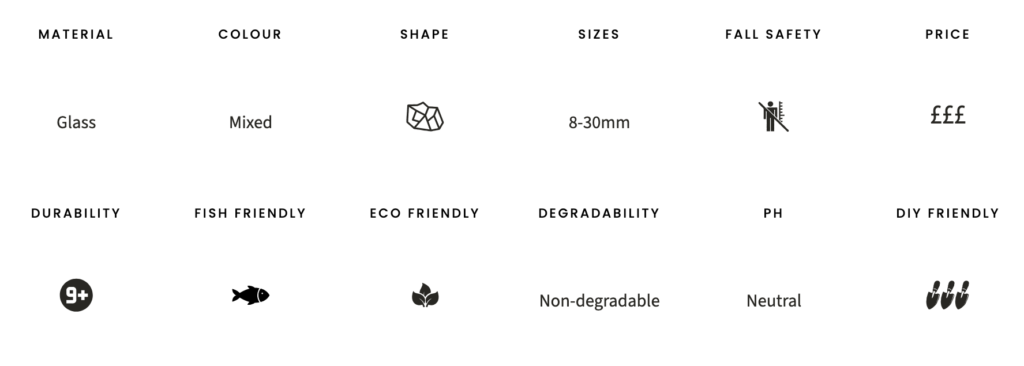
Size Range
Fall Safety
Unsuitable for play surfaces
Price
Luxury
Durability
High
Fish Friendly
Yes

Eco-friendly
Yes
Degradability
Non-degradable
pH
Neutral
DIY-Friendly
Yes

Benefits
Decorative aggregates like glass aggregate offer many benefits for garden and landscape design. They are versatile, require minimal maintenance, and can significantly enhance the aesthetic of a garden or any space. Their use contributes to adequate drainage and weed suppression and can provide a durable, long-lasting surface for paths and driveways.
Glass aggregates are renowned for their striking appearance and ability to reflect light, which makes them ideal for use in areas that receive ample sunlight to create a shimmering, sparkly effect. This same quality can be used to brighten darker areas. Additionally, they never lose their colour or fade in the sun, making them highly durable.
- Inhibits weeds
- Improves drainage
- Hard-wearing
- Eco-friendly, sustainable
- Low-maintenance
- Moisture retention
- Versatile all-rounder
- pH neutral
- Transform space fast
- Safe for aquatic life
- Root protection
- Easy to lay
Applications
Glass aggregates are suitable for creating modern, stylish features, especially resin-bonded surfaces for their anti-slip properties. They are great for use in water features and fire pits, as well as a decorative feature or top layer in potted plants. They are also popular for decorating grave memorials, with the symbolism of eternal life represented by colours and the non-degradability of glass.
Glass chippings can also be used in outdoor concrete design and benefit the look and durability of the concrete finish. Glass aggregate in concrete is used more often today due to their colour options, which can add unique patterns to the surface finish or give it a highly polished shine. One disadvantage of glass as aggregate in concrete is that it’s not as strong as other aggregates, so it may only be suitable for some applications. Another is that waste glass can absorb moisture, which can lead to the concrete cracking or deteriorating over time.
In the following section, we list many common glass aggregates uses, although it is not exhaustive. Wherever there is a hyperlink beside an item, an article from Outdoor Aggregates about the topic is available.

Inspiration and Informational Articles
- Resin-bonded glass gravel paths
- Resin-bonded glass gravel driveways
- Ground cover and decorative borders
- Water features & ponds
- Glass aggregate for concrete
- Rockeries
- Glass aggregate mulch
- Aquascaping
- Planters and pot plants
- Terrariums and indoor plant decor
- Art and crafts
DIY-Friendly How-To Guides
- Ground cover: How to lay gravel
- Pathway: How to lay a gravel path
- Driveways: How to build a driveway
Need to work out how many stone chippings your project needs? Try our free gravel calculator.
Other Applications
Some other excellent applications for glass aggregate include:
- Concrete base for terrace, patios or outdoor seating areas
- Aquariums

Unsuitable For
The following list represents the kinds of applications that glass aggregate may not be suitable for:
- 1Areas with fine plantings: If you have creepers or low-growing plants in your garden gravel can make it harder for these plants to thrive, as it may interfere with their root systems as they try to grow.
- 2Play surfaces
- 3Use as substrates for heavy loads, areas needing compact, stable surfaces.
Maintenance

Glass aggregates are generally low maintenance, especially when a heavy duty membrane is installed underneath to suppress weeds, with most work limited to raking and the occasional removal of debris. Occasional power washing of the product is advisable to maintain the original colour and prevent algae or moss buildup. Materials also may have glass dust, which should be handled with gloves to avoid injury.
For more on how to clean gravel, read our article: how to clean garden stones.
Purchasing Tips

When purchasing glass aggregate, consider the size and colour best suits your design needs. Where available, it is cost-effective to request a sample to assess the stone’s colour and quality against your design requirements. Always check for quality and ensure the glass aggregate suits your intended use.
FAQs
How can you tell glass from aggregate, and is it classified as a rock?
Glass aggregates are generally translucent and look like glass. No, glass is not classed as rock. It is a manufactured material made from silica, which is a component of rock.
Is sand a rock?
Sandglass is a naturally occurring granular material composed of finely divided rock and mineral particles, not glass.
What can you use glass aggregate for?
Glass aggregate can be used in landscaping, as mulch, in concrete applications, and decorative features like water features, memorials and fire pits.
Can I mix glass into concrete?
Yes, glass can be mixed into concrete as an added colour or aggregate to enhance its aesthetic appeal and utilise recycled materials.
What are the disadvantages of glass concrete?
Glass concrete products can be more expensive, and these products may have a risk of cracking under certain conditions.
There are many wonderful types of gravel and aggregates available for your project needs. Check them out!